


- eledentadmin
- January 21, 2026
A cavity rarely starts with sharp pain. It often begins as sensitivity to cold, a rough spot, or food getting stuck. Then the worry starts. Will it get worse, will it start hurting, and will it need a bigger treatment later? That is why you searched types of dental filling.
The right option depends on three things: the tooth position, how deep the cavity is, and which permanent tooth filling material suits your bite. For most people, tooth coloured composite works well for visible teeth, while stronger materials are better for back teeth that handle heavy chewing. The dental fillings procedure is usually a simple same day treatment. The dentist removes decay, places the filling, then checks and polishes your bite so the tooth feels natural.
At Eledent Dental Hospitals, the team explains the diagnosis clearly and recommends a filling based on what your tooth needs, not guesswork. If you are looking for a dental filling in Hyderabad, you can visit the nearest Eledent branch for dental filling in Kondapur, dental filling in Kukatpally, dental filling in Manikonda, or dental filling in Banjara Hills.
What Is A Dental Filling And Why Might You Need One?
A dental filling is a treatment that repairs a tooth with a cavity, minor crack, or worn area by sealing the damaged part after removing decay. This stops the cavity from spreading and helps you chew without pain.
You might need a filling if you notice:
- Sensitivity to cold, hot, or sweet foods,
- A sharp edge or a small chipped area,
- Food getting stuck in the same spot often,
- Pain when chewing on one side,
- A visible dark spot, pit, or hole on the tooth.
A filling is usually enough when the damage is limited to the tooth structure and the nerve is not involved. If the cavity is very deep or the tooth has a major crack, your dentist may recommend a different treatment after examining the tooth and, if needed, taking an X ray.
What Are The Most Common Types Of Dental Filling Materials Used Today?
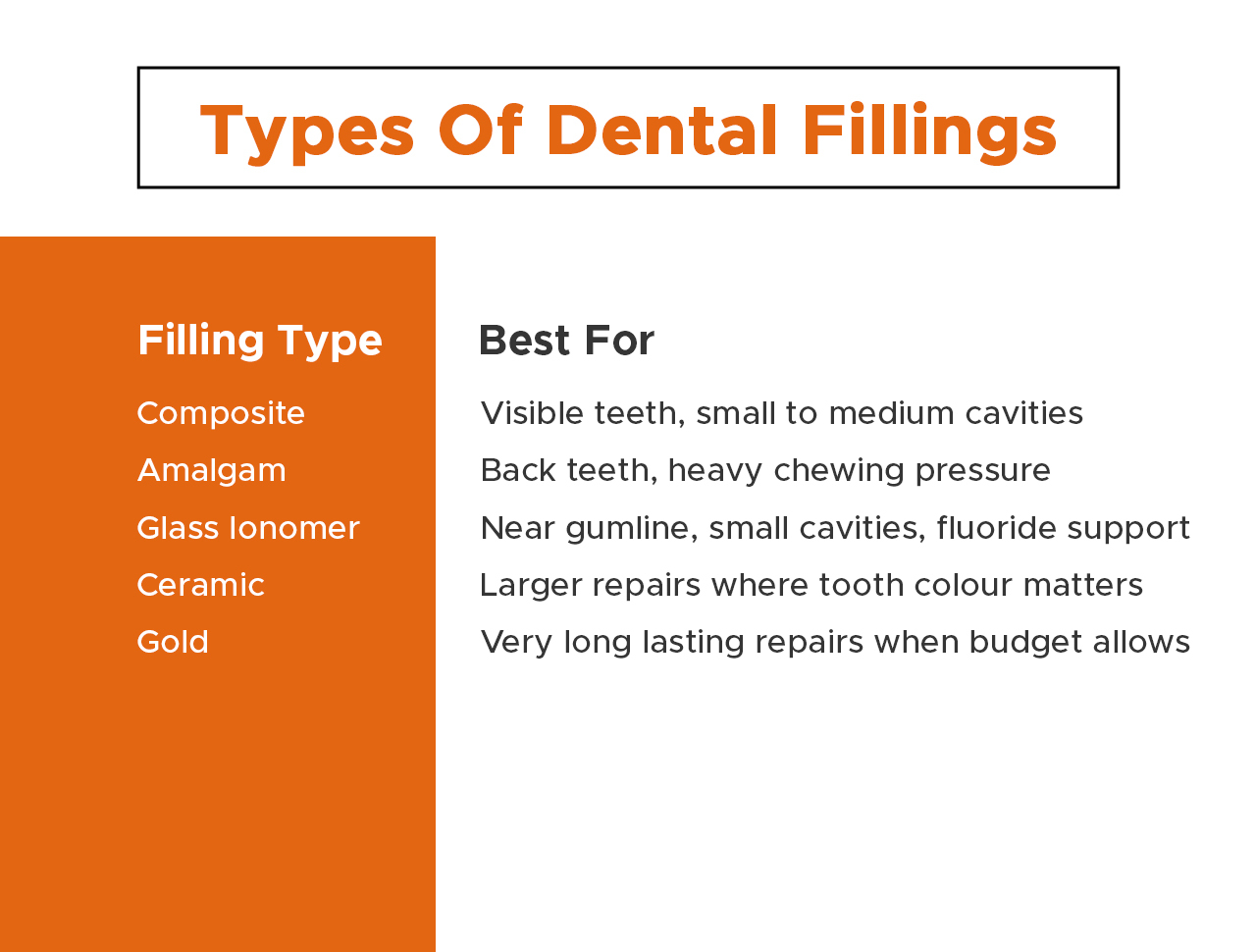
The most common types of dental filling materials include composite, amalgam, glass ionomer, ceramic, and gold, and each one fits a different tooth, cavity size, and budget.
What Is A Composite Filling And When Is It A Good Choice?
A composite filling is tooth coloured and blends with your natural enamel, so it is often chosen for front teeth and visible areas. It is also commonly used for small to medium cavities in back teeth when the bite pressure is not extreme. Composite is a good choice when you want a natural look and a same visit repair.
What Is An Amalgam Filling And When Is It Still Used?
An amalgam filling is a metal filling known for strength and wear resistance. Dentists may still use it for back teeth that take heavy chewing load, especially when the cavity is large and durability is the main priority. It is visible, so it is not usually preferred for front teeth.
What Is A Glass Ionomer Filling And Who Is It Best For?
A glass ionomer filling can release fluoride over time, which may help protect the tooth in certain cases. It is often used for areas near the gumline, small cavities, or in children’s teeth where the bite force is lower. It is usually not the first choice for large cavities on chewing surfaces.
What Is A Ceramic Filling And When Does It Make Sense?
A ceramic filling is tooth coloured and resists staining well, which makes it a strong option when appearance matters. Dentists may suggest it for larger cavities or for teeth that need a more durable tooth coloured repair than standard composite. Ceramic options may take more planning depending on the case.
What Is A Gold Filling And Who Usually Chooses It?
A gold filling is highly durable and can last many years when cared for well. It is usually chosen by people who prioritise long term wear and do not mind the visible colour. It can be more expensive and may require more than one visit, depending on how it is made.
Which Permanent Tooth Filling Material Is Best For Front Teeth Vs Back Teeth?
The best permanent tooth filling material depends on where the tooth sits and how much pressure it handles, because front teeth need a natural look while back teeth need strength for chewing.
What Works Best For Front Teeth Where Looks Matter?
- Composite is often preferred because it is tooth coloured and can be shade matched.
- It suits small to medium cavities and visible areas.
- Ceramic can be considered for larger repairs when you want a tooth coloured option with better stain resistance.
Your dentist will also check how your teeth meet, because bite pressure can affect the final choice.
What Works Best For Back Teeth Where Chewing Pressure Is High?
Back teeth handle heavy chewing forces, so durability is the priority.
- Amalgam is known for strength in molars and is still used in selected cases.
- Composite can work well when the cavity is not too large and the bite can be balanced properly.
- Ceramic options may be suggested for bigger repairs if you want a tooth coloured result with stronger wear resistance.
Final selection should follow the cavity depth, tooth position, and bite pattern, not just preference.
How Do Dentists Decide Which Type Of Dental Filling Is Right For You?
Dentists choose the right filling by checking the cavity depth, tooth position, bite pressure, and what you want, so the filling feels comfortable and lasts longer.
How Does Cavity Size And Depth Change The Choice?
- Small, shallow cavities usually suit composite because the repair is limited and easy to shape.
- Medium cavities may need a stronger build up, based on how much tooth is missing.
- Deep cavities close to the nerve may need extra protection under the filling, or a different plan if the nerve is involved.
- Very large cavities may not hold a basic filling well and can require a stronger restoration.
How Does Tooth Location Change The Choice?
- Front teeth often need tooth coloured materials because they are visible.
- Back teeth need materials that can handle chewing force.
- Gumline cavities may need a material that bonds well in that area, based on moisture control and tooth structure.
How Do Budget, Aesthetics, And Lifespan Affect The Decision?
- Composite is often chosen for a natural look with same visit placement.
- Ceramic options can cost more but may resist staining better and suit larger repairs.
- Some durable options are more visible, so the trade off is strength versus appearance.
What If You Have Allergies Or Sensitivity To Materials?
- Tell your dentist if you have reacted to metals or dental materials in the past.
- If you grind your teeth or have jaw tightness, share that too because it affects wear.
- Your dentist can adjust the material choice and bite fit to reduce sensitivity and stress on the filling.
What Is The Dental Fillings Procedure Step By Step?
The dental fillings procedure is usually completed in one visit, where the dentist removes decay, places the selected filling material, and adjusts your bite so the tooth feels normal again.
What Happens Before The Filling Starts?
- The dentist checks the tooth and asks about sensitivity, pain, and food trapping.
- An X ray may be advised if the cavity depth is not clear from the surface.
- The tooth and gum area are numbed so you stay comfortable during treatment.
What Happens During The Filling Appointment?
- The decay is removed and the tooth is cleaned to prepare a strong base.
- The dentist places the chosen filling material in layers or in a single placement, depending on the material.
- The filling is shaped to match your natural tooth structure.
- Your bite is checked so the filling does not feel high or cause pain while chewing.
- The tooth is polished so it feels smooth against your tongue and neighbouring teeth.
What Happens After The Filling Is Placed?
- Mild sensitivity to cold or pressure can happen for a short time.
- Avoid chewing until numbness wears off to prevent accidental cheek or tongue bites
- If the tooth feels high, sharp, or painful when biting, a quick adjustment can fix it.
How Long Do Different Dental Fillings Last And When Should You Replace Them?
Dental fillings can last for years, but the exact lifespan depends on the filling material, cavity size, your bite pressure, and daily habits like brushing, flossing, and grinding.
How Long Can You Expect A Filling To Last?
- Composite fillings often last several years and may need earlier replacement if the cavity was large or bite force is high.
- Amalgam fillings often last longer in back teeth because they handle chewing pressure well.
- Glass ionomer fillings may wear faster on chewing surfaces and are usually chosen for lower stress areas.
- Ceramic and gold restorations can last longer in many cases, especially when the fit is stable and oral care is consistent.
What Signs Tell You A Filling Needs Replacement?
- Pain when biting or chewing on that tooth
- Sensitivity that does not settle after a reasonable time
- Food getting stuck around the filled area repeatedly
- A rough edge that feels new or sharp
- A visible crack, dark line, or part of the filling breaking off
- A change in bite, where the tooth feels higher than before
If you notice any of these signs, it is better to get it checked early so the tooth does not develop deeper decay under the filling. Book your consultation with our team of expert dentists at Eledent Hospitals now for dental filling in Hyderabad.
What Should You Avoid After A Filling And How Do You Care For It?
After a filling, simple care in the first day and consistent daily hygiene help the tooth settle well and reduce the chance of the filling loosening or cracking.
What Should You Do In The First 24 Hours?
- Wait until numbness wears off before chewing to avoid biting your cheek or tongue.
- Chew on the opposite side if the filled tooth feels tender.
- Choose softer foods if you feel soreness while biting.
- Drink water after meals to reduce food sticking around the filling.
What Should You Avoid Right After A Filling?
- Very hard foods like ice, hard candy, and hard nuts on the treated side
- Sticky foods if the tooth feels sensitive or the filling is new
- Very hot or very cold foods if you notice temporary sensitivity
What Daily Habits Help A Filling Last Longer?
- Brush twice daily with a soft brush and proper technique.
- Floss once daily to clean the edges where new decay can start.
- Limit frequent sugary snacks and sugary drinks between meals.
- Use a mouthguard if you grind your teeth at night.
- Get routine dental checks so early wear or leakage can be fixed before it becomes a bigger cavity.
Book Your Dental Filling Appointment In Hyderabad At Eledent Dental Hospitals Now!
If you have sensitivity, a visible cavity, or food getting stuck in one spot, it is better to fix it early before it turns into pain or a deeper infection. At Eledent Dental Hospitals, the dentist checks the cavity depth, explains the right filling option for your tooth, and completes the dental fillings procedure with a proper bite check so it feels comfortable when you chew.
To book a dental filling in Hyderabad, call 077996 49994 and visit the nearest branch:
- Kondapur: K1, Primo Building, 3rd Floor, Beside Chroma, Above Ratnadeep, Near Kondapur Bus Stop, Hyderabad, Telangana 500084
- Kukatpally: 2 Opposite Holistic Hospital, MIG 161, Ground Floor, Rd No. 1, KPHB Phase 1, Kukatpally, Hyderabad, Telangana 500072
- Banjara Hills: Raichandani Construction, Road No. 12, Sri Ram Nagar Colony, Banjara Hills, Hyderabad, Telangana 500034
- Manikonda: 1st Floor, Sunshine Regulas Building, Manikonda Rd, Above KFC, Muppas Panchavati Colony, Hyderabad, Telangana 500089
- Kompally: 2nd Floor, Bliss MVM Building, Suchitra Rd, Opposite Cinepolis, Suchitra, Green Park, Jeedimetla, Suchitra, Hyderabad, Telangana 500067
You will also get clear guidance on the best permanent tooth filling material for your tooth, along with simple aftercare steps. Schedule your appointment with the best dentists in Hyderabad now.