



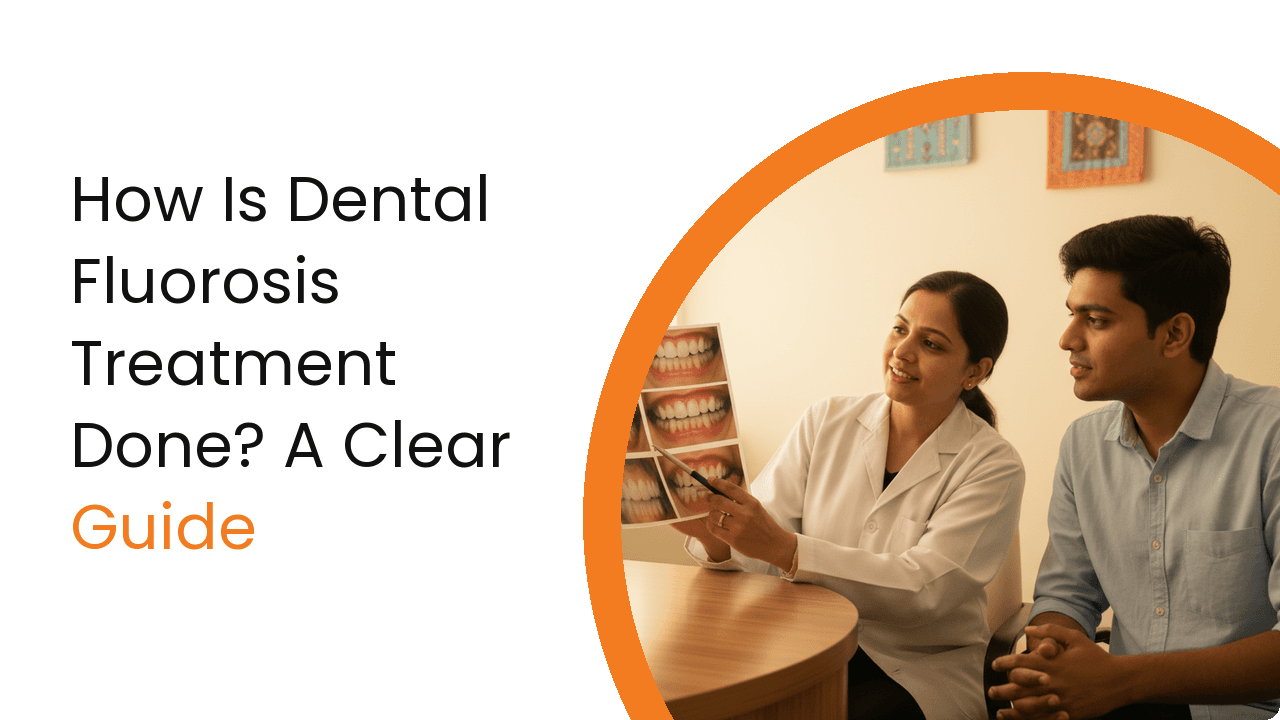
How is dental fluorosis treatment done when white marks or brown stains affect your smile? Most people worry that treatment will hurt, look artificial, or require drilling healthy teeth. In suitable cases, care starts with an examination and photographs, followed by a plan based on enamel changes and appearance goals. Mild staining may respond to professional whitening. Deeper marks may need bonding, veneers, or another restoration after assessment. Dental fluorosis treatment improves the visible effects of enamel changes, while reducing excess fluoride exposure helps prevent further concerns during tooth development. At Eledent Dental Hospitals, our NABH-accredited hospital uses clear treatment planning, specialist input, CBCT imaging when indicated, and CEREC CAD-CAM technology for suitable restorations. Read on for the exact steps, option choices, delay concerns, aftercare, and questions to ask before booking.
Key takeaways
- Assessment comes before choosing whitening, bonding, veneers, or crowns for dental fluorosis.
- Whitening may help mild stains, while bonding or veneers can mask deeper colour and surface changes.
- Treatment improves appearance, but fluoride exposure should also be reviewed where relevant.
- Outcomes depend on individual enamel changes, oral health status, and the selected treatment.
- Eledent Dental Hospitals has 20+ years of experience and 30,000+ smiles restored.
How Is Dental Fluorosis Treatment Done?
Dental fluorosis treatment is planned after examining enamel changes, checking oral health, and matching the option to the appearance concern.
Dental fluorosis is an enamel change that develops while permanent teeth form and may appear as white lines, spots, brown stains, or uneven surfaces. A qualified dentist first reviews the history of fluoride exposure and checks whether staining could have another cause.
- Consultation and visual examination identify the colour, texture, and extent of enamel changes.
- Photographs help record the starting appearance and support treatment planning.
- X-rays are used when the dentist needs to assess tooth structure or another dental concern.
- The treatment plan explains suitable choices, limits, fees, and expected maintenance.
- Aftercare instructions help protect the result and support good oral hygiene.
Our Dental Fluorosis Treatment service follows this assessment-led approach. CBCT imaging is available when three-dimensional information is clinically useful, rather than as a routine step for every cosmetic concern.
Which Treatment Is Chosen For Mild Or Severe Fluorosis?
Mild fluorosis may suit professional whitening, while deeper stains or irregular enamel may require bonding, veneers, or crowns after assessment.
| Concern | Possible option | What it does |
|---|---|---|
| Light surface staining | Professional whitening | Reduces the contrast of suitable stains on the outer enamel. |
| Small pits or uneven colour | Dental bonding | Uses tooth-coloured resin to improve shape and visible colour. |
| Deep or widespread staining | Porcelain veneers | Covers the front surface when enamel appearance needs broader masking. |
| Major structural weakness | Dental crown | Encases a suitable tooth when a dentist confirms greater protection is needed. |
Whitening cannot rebuild enamel or correct deep pits. Bonding can preserve more natural tooth structure, but it may require maintenance. Veneers and crowns involve more planning and are not automatically suitable for every tooth.
Our smile designing service can support a broader appearance plan when several front teeth show uneven colour or shape. The dentist still confirms whether whitening, bonding, or a restoration is appropriate.
What Happens During The Consultation And Procedure?
The consultation usually moves from diagnosis to photographs, treatment planning, tooth preparation where required, the procedure, and aftercare advice.
Examination And Planning
We check enamel colour, surface texture, sensitivity, bite, gum health, fillings, and any signs of decay. This matters because cosmetic treatment should not hide untreated disease.
Digital photographs help compare the selected shade and shape. X-rays may be recommended when the tooth history or symptoms require internal assessment. The dentist discusses whether the change is cosmetic, structural, or both.
Whitening
Professional whitening uses a dentist-selected method and shade goal. Temporary sensitivity can occur, especially when enamel already feels sensitive. The dentist explains how to manage it and whether whitening is likely to produce an even result.
Bonding
For bonding, the dentist prepares the surface, selects a tooth-coloured resin, shapes it, and hardens it with a curing light. The final contour is checked against the bite and neighbouring teeth.
Veneers Or Crowns
Veneers cover the visible front surface. Crowns cover more of the tooth and are considered when the tooth structure needs additional protection. CEREC CAD-CAM technology may support suitable same-visit or planned ceramic workflows, depending on the case.
Patients comparing appearance options can review Dental Fluorosis Treatment vs Teeth Whitening: Which Fits? before the consultation.
What Happens If Dental Fluorosis Treatment Is Delayed?
Delayed care usually leaves the visible enamel changes unchanged, while untreated decay, erosion, or a weakened tooth can progress separately.
Fluorosis itself generally reflects enamel development during childhood, so adult treatment does not remove the original cause. However, persistent fluoride exposure should be discussed, particularly for children whose permanent teeth are still forming.
Waiting can also affect the available cosmetic choices. A stain may remain suitable for whitening, while a chip, cavity, erosion, or worn bonding may add another treatment need. A dentist can separate fluorosis from these conditions during examination.
Our dental erosion treatment team can assess surface loss when enamel wear appears alongside colour changes. Different causes need different planning.
How Should Teeth Be Cared For After Treatment?
Aftercare includes gentle brushing, regular cleaning, sensible stain control, and review visits based on the chosen treatment.
- Brush Gently: Use a soft brush and fluoride toothpaste as advised by your dentist.
- Limit Strong Staining: Discuss tea, coffee, tobacco, and coloured foods if they affect the shade.
- Protect Bonding: Avoid biting hard objects or opening packets with treated teeth.
- Monitor Sensitivity: Report ongoing sensitivity, rough edges, or bite changes to the dental team.
- Review Oral Health: Maintain cleaning visits so decay and gum problems do not affect the result.
Our FMOP Treatment service may be discussed when professional cleaning is suitable alongside cosmetic planning. Cleaning cannot remove fluorosis, but it can address surface deposits that change tooth colour.
| Option | Main benefit | Key consideration |
|---|---|---|
| Whitening | Improves suitable surface staining | May not change deep marks or pits |
| Bonding | Changes small areas of colour and shape | Can need repair or replacement over time |
| Veneers | Masks broader front-surface changes | Requires careful tooth preparation planning |
| Crowns | Covers a tooth needing greater protection | Usually reserved for suitable structural cases |
For patients seeking care through another branch, Dental Fluorosis Treatment in Kompally follows the same planning steps.
How Can You Choose A Safe Treatment Plan?
A safe plan matches the enamel condition, oral health, aesthetic goal, budget, and willingness to maintain the chosen restoration.
Ask which marks are fluorosis and which may reflect decay, erosion, old fillings, or staining. Ask whether whitening alone can create an even shade. Ask how much tooth preparation bonding, veneers, or crowns would involve.
Cost transparency also matters. Request a written plan that separates examination, imaging, cleaning, whitening, bonding, laboratory work, and restorations. Ask about payment options or EMI availability before treatment begins.
Eledent Dental Hospitals is a NABH-accredited hospital with 20+ years of experience and 30,000+ smiles restored. Our team includes implantologists, orthodontists, endodontists, and oral surgeons, allowing related concerns to be referred within one care system. Patient feedback includes a 4.9 out of 5 rating from 787+ patient reviews on JustDial and 5.0 from 256 verified reviews on Medical Tourism Co.
Call Dental Abscess Treatment vs Tooth Extraction: Which Is Right? only if pain, swelling, or a suspected infection is also part of the concern. Fluorosis treatment does not replace urgent assessment for infection.
Dental fluorosis treatment starts with diagnosis, photographs, and a discussion of realistic options. Whitening may suit surface staining, while bonding, veneers, or crowns may address deeper colour and texture changes. Delaying cosmetic care usually leaves the appearance unchanged, but other enamel problems can progress separately. Outcomes depend on individual case and oral health status. For an assessment-led plan, call Eledent Dental Hospitals on +917799639994. Ask about suitable treatment, aftercare, payment options, and whether a review is needed before booking.
FAQs
How is dental fluorosis treatment done?
A dentist examines the enamel, reviews fluoride exposure, and checks for decay or erosion. Suitable cases may receive professional whitening, bonding, veneers, or crowns, followed by aftercare guidance.
Can teeth whitening remove dental fluorosis?
Professional whitening may reduce suitable surface stains in mild cases. It usually cannot correct deep pits, marked enamel irregularities, or structural damage.
Is dental fluorosis treatment painful?
Treatment discomfort depends on the chosen procedure and tooth sensitivity. Whitening can cause temporary sensitivity, while bonding is usually planned with minimal tooth preparation when suitable.
How long does dental fluorosis treatment take?
The time depends on whether treatment involves whitening, bonding, veneers, or crowns. The dentist provides a schedule after examination, photographs, and any needed imaging.
Can dental fluorosis come back after treatment?
The treated surface does not simply recreate the original fluorosis pattern. However, staining, restoration wear, and continued fluoride exposure during tooth development should be reviewed separately.
What should I ask before choosing fluorosis treatment?
Ask which enamel changes are fluorosis, whether whitening can create an even shade, how much tooth preparation is needed, and what maintenance the option requires.
