



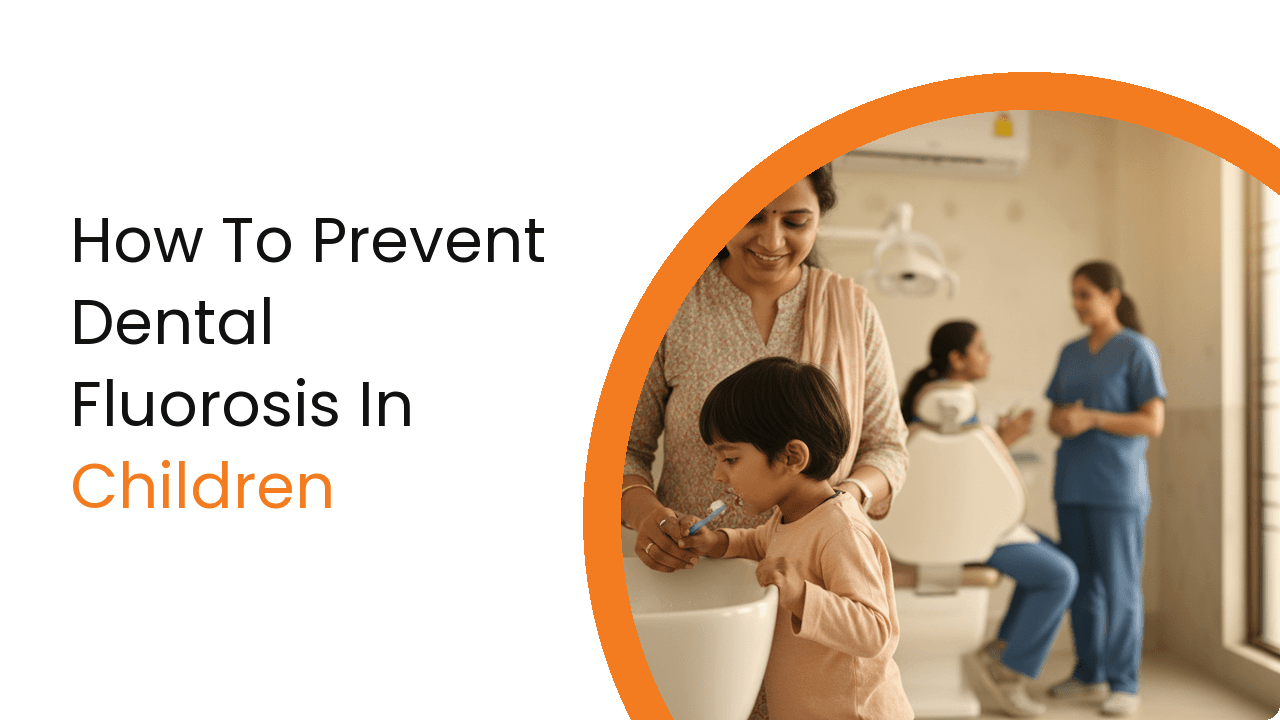
Parents searching how to prevent dental fluorosis often worry about white marks on a child’s developing teeth. The concern usually starts after noticing faint streaks, asking about toothpaste, or hearing that drinking water contains fluoride. The practical answer is simple: use only a small, age-suitable amount of fluoride toothpaste, discourage swallowing, check the family’s main water source, and ask a qualified dentist before adding fluoride supplements. Eledent Dental Hospitals advises families through clear assessment and prevention planning. Our NABH-accredited hospital team uses careful diagnosis, child-friendly communication, and specialist support when enamel changes need review. This guide explains toothpaste amounts, drinking water questions, supplement safety, daily habits, and when a dental visit can help distinguish fluorosis from decay or enamel defects.
Key takeaways
- Use a small, age-appropriate amount of fluoride toothpaste and supervise brushing.
- Children should not swallow toothpaste, mouth rinse, or unapproved fluoride products.
- Ask a qualified dentist before using fluoride supplements or changing a child’s routine.
- Fluorosis develops while teeth form, so prevention focuses on early exposure control.
- White marks can have several causes and require assessment before treatment decisions.
How Can Parents Prevent Dental Fluorosis In Children?
Parents can reduce risk by controlling swallowed fluoride while children’s permanent teeth develop. Use a small smear of toothpaste for a young child and a pea-sized amount once the child can spit reliably. Supervise brushing and keep toothpaste out of reach.
Fluoride helps strengthen enamel, but repeated swallowing during tooth development can contribute to fluorosis. The goal is not to remove fluoride from every routine. The goal is to use the right amount for the child’s age and exposure.
- Supervise Brushing: Watch the child brush and remind them to spit instead of swallow.
- Store Toothpaste Safely: Keep toothpaste away from unsupervised access.
- Use A Soft Brush: A small brush helps control toothpaste placement and brushing pressure.
- Keep Routine Care Consistent: Regular brushing still supports cavity prevention.
Families can also review How To Prevent Cavities With Daily Habits That Work for brushing, food, and drink habits that protect developing teeth.
What Is Dental Fluorosis And When Does It Develop?
Dental fluorosis is a change in enamel appearance caused by too much fluoride intake while permanent teeth are developing beneath the gums. It can appear as faint white lines, patches, or, in more marked cases, uneven enamel colour.
Fluorosis does not develop because of fluoride placed on a fully formed tooth. It relates to fluoride entering the body during tooth formation. The exact appearance depends on exposure and individual enamel development.
| Enamel Appearance | What Parents May Notice |
| Faint White Lines | Fine marks that may show under certain light. |
| White Patches | Cloudy areas that can appear on several teeth. |
| Uneven Surface | More marked changes may include shallow enamel irregularities. |
| Single Tooth Mark | A single area may have another cause and needs assessment. |
White marks are not automatically fluorosis. Early decay, enamel defects, injury, and other conditions can look similar. Our pediatric dentist service supports age-appropriate examination when the cause is unclear.
How Much Fluoride Toothpaste Should A Child Use?
Children should use a small, age-suitable amount of fluoride toothpaste, with an adult supervising until swallowing is no longer a concern. The correct amount depends on age, ability to spit, and professional advice.
| Routine Point | Safer Family Practice |
| Toothpaste Amount | Use only the small amount advised for the child’s age. |
| Brushing Supervision | An adult watches placement, brushing, and spitting. |
| Toothpaste Storage | Store the tube where a child cannot eat it. |
| Mouth Rinse | Use only if a qualified dentist recommends it for the child. |
Children who cannot spit well may swallow more toothpaste than intended. Avoid turning brushing into a game involving large amounts of paste. A calm, repeatable routine works better.
Fluoride supplements should never be started based only on a family concern about water. A qualified dentist can review the child’s age, diet, toothpaste use, and other fluoride sources before advising anything.
What Should Parents Check About Drinking Water?
Parents should ask about fluoride in the child’s main drinking water before adding supplements or changing toothpaste habits. Water exposure can vary between household sources, bottled products, filtration systems, and prepared drinks.
Bring clear information about the family’s usual water source to a dental appointment. A dentist may also ask about school water, formula preparation, and whether the child regularly drinks from more than one source.
- Main Water Source: Note whether the child drinks tap, filtered, bottled, or mixed household water.
- Filtration Details: Keep the filter type and maintenance information available when asking for guidance.
- Formula Preparation: Mention the water used for infant formula if relevant.
- Supplement Questions: Ask before using fluoride tablets, drops, or fortified products.
Our Dental Fluorosis Treatment team can assess enamel changes and explain suitable next steps after examination. Prevention advice should match the child’s full exposure pattern.
What Happens If Excess Fluoride Exposure Is Not Addressed?
Continued excess fluoride exposure during tooth formation can lead to more visible enamel changes as permanent teeth emerge. Once enamel has formed, prevention cannot reverse the existing mark, so early exposure review matters.
This does not mean every white mark will worsen. Outcomes depend on individual case and oral health status. A dentist can assess whether the appearance fits fluorosis or another enamel condition.
Do not scrub marked teeth harder or use bleaching products on a child without professional advice. Aggressive brushing can irritate gums, while cosmetic products may not suit developing teeth.
When a child or parent feels worried about appearance, our guide How Is Dental Fluorosis Treatment Done? A Clear Guide explains how assessment leads to suitable options.
When Should A Child Have An Enamel Assessment?
A child should have an enamel assessment when marks are new, spreading, uneven, sensitive, painful, or difficult to distinguish from decay. A review also helps when parents are unsure about toothpaste, water, or supplements.
Our consultation process starts with questions about dental history and fluoride exposure. We then examine the teeth and use imaging only when clinically appropriate. The team explains findings before discussing care.
| Parent Concern | Useful Information To Bring |
| White Marks | When the marks appeared and whether they affect several teeth. |
| Toothpaste Use | Product type, amount used, and whether swallowing occurs. |
| Water Exposure | Main drinking source and any filtration or bottled water routine. |
| Family History | Previous enamel concerns or dental advice received by the child. |
Families seeking a branch-specific option can review Dental Fluorosis Treatment in Kukatpally, which follows the same assessment-led planning approach.
Eledent Dental Hospitals has 20+ years of experience and has restored 30,000+ smiles. Our NABH-accredited hospital uses specialist care, CBCT imaging when indicated, and clear treatment planning. Reviews include a 4.9 out of 5 rating from 787+ patient reviews on JustDial and 5.0 from 256 verified reviews on Medical Tourism Co.
Preventive care focuses on limiting swallowed fluoride, checking water exposure, and supervising daily brushing. White marks need assessment because fluorosis can resemble early decay or other enamel changes. Existing marks cannot be prevented from forming after enamel development, but a qualified dentist can explain suitable care. Eledent Dental Hospitals offers child-focused assessment through an NABH-accredited hospital and specialist team. Call +917799639994 to discuss your child’s toothpaste, water exposure, or enamel changes and book a consultation.
FAQs
Can fluoride toothpaste cause dental fluorosis in children?
Fluoride toothpaste can contribute to fluorosis if a child repeatedly swallows too much during tooth development. Adult supervision and an age-suitable amount reduce that risk while supporting cavity prevention.
How can I stop my child from swallowing toothpaste?
Use a small amount, supervise brushing, and teach the child to spit after brushing. Store toothpaste safely and ask a qualified dentist for advice if swallowing continues.
Should children use fluoride supplements?
Children should use fluoride supplements only after a qualified dentist reviews their total fluoride exposure. Water source, toothpaste use, age, and diet can affect that decision.
Are white spots on children’s teeth always fluorosis?
White spots are not always fluorosis. Early decay, enamel defects, injury, and other conditions can look similar, so a dental examination helps identify the likely cause.
Can dental fluorosis be reversed in children?
Existing fluorosis marks cannot be reversed through brushing because they formed during enamel development. A qualified dentist can assess appearance, enamel condition, and suitable treatment options.
