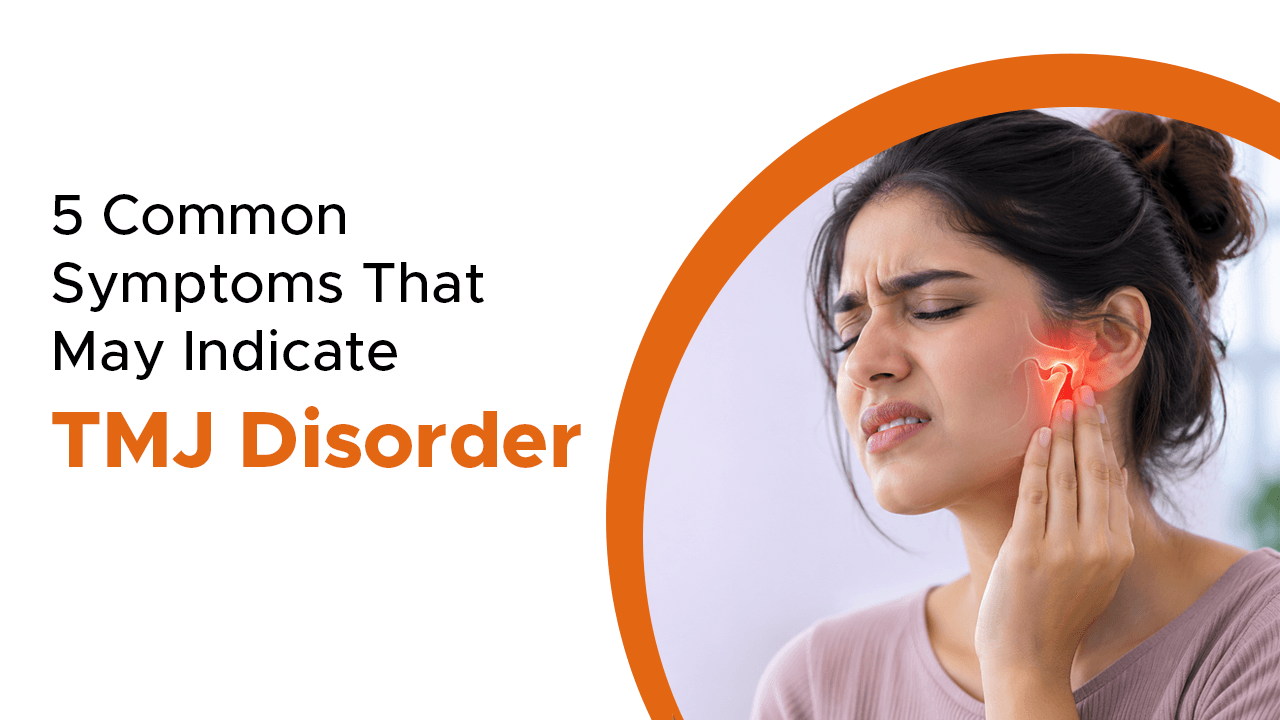
Your jaw feels sore when you wake up, and it clicks every time you chew. Last month you had an earache, but the doctor found no infection. You've tried ignoring it, but it keeps coming back.
These can be signs of a TMJ disorder, a problem with the hinge joint of your jaw or the muscles that move it. Knowing which signs matter helps you decide whether to wait or get checked.
This guide covers TMJ disorders - symptoms and causes, what to try at home and when to see a specialist. Eledent Dental Hospital has treated patients for 19+ years, with oral and maxillofacial surgeons and TMJ specialists across five NABH-accredited branches in Hyderabad.
You'll also find the treatment options, the warning signs that need urgent care and where to get checked in Hyderabad.
What Is TMJ Disorder, and How Common Is It?
The temporomandibular joint (TMJ) is the hinge in front of each ear that links your jaw to your skull. A TMJ disorder is pain or trouble in this joint or the muscles around it.
A 2024 review of 74 studies put the global rate at about 34%. In Asia, it was about 33%. The review appeared in the Journal of Clinical Medicine.
What Are the 5 Common Symptoms of TMJ Disorder?
The five most common signs are jaw pain or tenderness, clicking or popping, a stiff or locking jaw, ear pain or ringing, and headaches or facial ache. You may notice one or several, and they often come and go. For each one below, you'll see what it feels like, what else it could be, what to try at home and when to book a check.
1. Jaw Pain or Tenderness
Feels like: A dull ache in front of the ear or along the jaw. It's often worse after meals or in the morning.
- Could also be: A tooth or gum infection near the back teeth.
- Try at home: Soft food and a warm pack on the sore side.
- Book a check if: The ache is constant, returns often or makes eating hard.
2. Clicking, Popping or Grating When You Open Your Mouth
Feels like: A click you hear or feel when you open wide or chew.
- Could also be: Normal joint noise. Clicking without pain is common and harmless.
- Try at home: Nothing, if there's no pain. Skip chewing gum if it bothers you.
- Book a check if: The click hurts, or your jaw catches before it opens.
3. A Jaw That Feels Stiff or Locks
Feels like: You can't open your mouth fully. Sometimes the jaw sticks for a moment.
- Could also be: A swollen gland or infection, especially with fever.
- Try at home: Gentle opening stretches. Cut food into small pieces.
- Book a check if: It locks more than once or opening gets harder.
4. Ear Pain, Fullness or Ringing Without an Ear Infection
Feels like: An earache or blocked ear, but your ear check is normal.
- Could also be: An ear or sinus infection. Rule these out first.
- Try at home: Notice whether chewing or clenching makes it worse.
- Book a check if: Your ENT finds nothing and the pain stays. Read more on pain under the ear behind the jaw.
5. Headaches, Facial Ache or Neck Pain
Feels like: Tightness at the temples, cheeks or neck, often on waking.
- Could also be: Tension headache, migraine or sinus trouble.
- Try at home: Keep your teeth apart during the day. Lips together, teeth apart.
- Book a check if: Headaches come with jaw pain, or painkillers stop working.
Your next step: Keep a jaw diary for one week. Write down when it hurts and what you were doing.
[INFOGRAPHIC 1 GOES HERE]
What Causes TMJ Disorders?
Often there's no single cause. TMJ pain usually builds from several factors at once, such as nightly clenching during a stressful month, or an old jaw injury combined with arthritis. The most common contributors are:
- Grinding or clenching your teeth (bruxism), often in your sleep
- Stress, which makes many people clench without noticing
- A blow to the jaw
- Arthritis in the joint
- The cushioning disc inside the joint slipping out of place
- Habits like chewing gum, biting nails or chewing pens
A bad bite is often blamed, but US dental researchers at NIDCR say the evidence doesn't support it.
Who Is More Likely to Get TMJ Disorder?
Your risk is higher if you have:
- A habit of grinding or clenching, day or night
- Ongoing stress, anxiety or poor sleep
- Arthritis, such as rheumatoid arthritis or osteoarthritis
- A past jaw or face injury
- Long-term pain conditions like fibromyalgia
Having a risk factor doesn't mean you'll get TMJ pain. It just means symptoms are worth watching.
Will TMJ Symptoms Go Away on Their Own?
Often, yes. NIDCR, the US National Institute of Dental and Craniofacial Research, says many cases clear up without treatment. These steps help:
- Eat soft food
- Use a warm or cold pack
- Do gentle jaw stretches
- Avoid wide yawns
- Catch yourself clenching during the day
When Is Self-Care Not Enough?
See a specialist if:
- The pain is constant or keeps returning
- Your jaw locks
- It affects your eating or sleep
- It's getting worse
How Is TMJ Disorder Treated?
Treatment usually starts simple and reversible. Most people never need surgery. A specialist picks the steps that suit your case.
- Home care and habit changes: Soft food, warm packs and less clenching.
- Jaw exercises: Guided stretches to ease muscle tightness and improve opening.
- Medicines: A short course your doctor prescribes for pain or muscle spasm.
- Night guard or splint: A custom mouthpiece that reduces grinding pressure, in suitable cases.
- Stress and sleep support: Because clenching often rises with stress.
- Further procedures: Considered only if the steps above don't help. Your specialist explains the options first.
Be wary of anyone who suggests grinding down healthy teeth or a full bite correction as a first step for TMJ pain.
Which Jaw Symptoms Need Urgent Medical Care?
Go to a hospital emergency department at once if jaw pain comes with chest pain, breathlessness, sweating or left arm pain. These can signal a heart problem.
Also get urgent care for:
- A jaw stuck open or shut
- Facial swelling with fever
- Jaw pain after a fall or injury
Who Should You See for TMJ Symptoms?
See a dentist or a TMJ specialist. A TMJ specialist is often an oral and maxillofacial surgeon, who treats the jaw, face and mouth. If your symptoms began with ear pain or headaches, you may have seen an ENT doctor or a physician first. If their tests come back normal, a TMJ check is the right next step.
Many people start by searching for a
dentist near me. That works if the clinic can refer you on.
The specialist checks how your jaw moves and feels the muscles. Here's
what a TMJ specialist checks. They may order a CBCT, a 3D scan of the joint, if needed. You can also
prepare for your TMJ appointment in advance.
Where Can You See a TMJ Specialist at Eledent Dental Hospital in Hyderabad?
Call +91 7799619994 and name your nearest branch. All five Eledent Dental Hospital branches have TMJ specialists, so you don't need to cross the city for follow-up visits. Your first visit covers a jaw and muscle check, a talk about your symptoms and habits, and a clear plan before any treatment starts.
What Does Eledent Dental Hospital Offer for TMJ Care?
Our
TMJ care in Hyderabad starts simple:
- A check of the jaw joint and muscles
- CBCT scans only when needed
- Habit and self-care advice
- A night guard or splint in suitable cases, after assessment. It's a custom mouthpiece that eases clenching pressure.
Which Eledent Dental Clinic Is Near You in Hyderabad?
Eledent Dental Hospital Banjara Hills
Address: Road No. 12, Sri Ram Nagar Colony, Banjara Hills, Hyderabad 500034.
Closest for: Jubilee Hills, Ameerpet, Film Nagar and Mehdipatnam. See our
TMJ Specialist in Banjara Hills page.
Eledent Dental Hospital Manikonda
Address: 1st Floor, Sunshine Regulas Building, Manikonda Road, Muppas Panchavati Colony, Hyderabad 500089.
Landmark: Above KFC on Manikonda Road.
Closest for: Narsingi, Puppalguda, Khajaguda and Neknampur. See our
TMJ Specialist in Manikonda page.
We also treat TMJ patients in Kondapur, Kukatpally (KPHB) and Kompally. Searching for a
dental clinic near me elsewhere in the city? One of these may be closer.
Bring your jaw diary to the visit.
So, When Should You Get Your Jaw Checked?
That covers TMJ disorders: symptoms and causes. Jaw pain, clicking, locking, ear symptoms and headaches often point to the jaw joint or its muscles. Most cases start with soft food, warm packs and less clenching. Book a check if the pain stays, keeps returning or your jaw locks. If jaw pain comes with chest pain or breathlessness, go to emergency care straight away. For everything else, a specialist can find the cause and keep treatment simple.
Call
Eledent Dental Hospitals on +91 7799619994 to book at your nearest branch.
Frequently Asked Questions
Is Jaw Clicking Always a Sign of TMJ Disorder?
No. Clicking or popping without pain is common and usually harmless. Many people have a noisy jaw joint and never develop problems. Get it checked if the click comes with pain, your jaw catches or locks, or opening your mouth starts to feel harder. A specialist can tell a harmless click from a joint problem.
Can Stress Cause TMJ Pain?
Yes, it can add to it. Stress makes many people clench or grind their teeth, often during sleep or while concentrating. That constant pressure tires the jaw muscles and strains the joint. Easing stress, catching daytime clenching and, in some cases, wearing a night guard can reduce the pain.
Can a Night Guard Help With TMJ Disorder?
In suitable cases, yes. A night guard or splint is a custom mouthpiece worn while you sleep. It spreads the pressure of grinding and clenching, which can ease muscle pain. It isn't a cure, and ready-made guards may not fit well. A specialist checks your jaw first and decides whether a guard suits you.
Can TMJ Disorder Cause Ear Pain Without an Ear Infection?
Yes. The jaw joint sits just in front of the ear canal, so pain from the joint or nearby muscles can feel like an earache, fullness or ringing. If your ear check is normal and the pain gets worse when you chew or clench, TMJ is more likely. See a specialist to confirm the cause.
How Long Does TMJ Pain Usually Last?
It varies. Many cases ease within a few weeks of home care, and NIDCR notes that many clear up without treatment. Some people have pain that comes and goes for months, often linked to clenching or stress. If pain lasts beyond a few weeks, keeps returning or your jaw locks, see a specialist.